

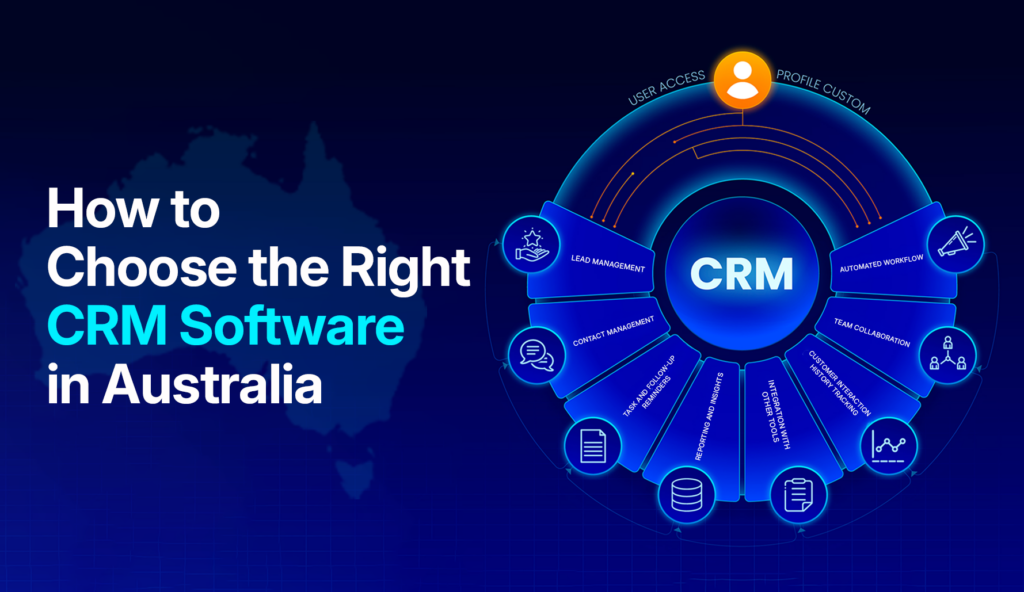
Are you a running business in Australia and believe you know your customers? However, things may turn out to be slightly different, and you can find yourself dealing with issues such as leads going cold, follow-up not being met, and clients repeatedly contacting you with the same problems. If such events are occurring, it is not an issue with the team you have. It is a problem with the system you’re using. And it does not just bother a big company. Even if you are a sole proprietor or run a small to medium-sized business, this can be a new challenge. In this case, you must use the right CRM software in Australia to fix the system.
It is beneficial to most businesses because it consolidates every chat, note, and task—teamwork becomes smoother and less tangled. Without software solutions such as CRM, businesses tend to struggle across tools, and clarity deteriorates. But with it, everyone on your team is getting the same information without having to search through emails or spreadsheets, and a single system alters how information flows from one person to another. If you are thinking about picking the right CRM software in Australia, it is not so simple. There are tons of options out there. Some feel built for giant corporations, not smaller hands-on teams. Read this guide, which breaks down how to choose the best CRM software in Australia, one step at a time.
Why Australian Businesses Need CRM Software
It is a known fact that most of the Australian businesses deal with fierce competition; everywhere you look. Customers don’t just want a quick response; they expect it. They want follow-ups that make sense and service that feels personal. Without a real system in place, that’s almost impossible to keep up with, and here the role of CRM software in Australia providers is crucial.
Look at the numbers: the CRM market in Australia is already worth close to USD 2 billion, and it’s set to hit about USD 5 billion by 2033, growing at nearly 10% every year (source: imarc). That’s a massive jump. It’s clear businesses all over Australia are betting on CRM to stay organized and ahead of the pack.
CRM software helps by:
- Tracking leads and customers in one place
- Improving sales follow-ups
- Supporting customer service teams
- Reducing manual work
- Offering clear reports for decisions
However, not every CRM suits every business. That is why choosing wisely matters.
Ahead, we will look at what makes Australian CRM software different from global tools.
What Makes CRM Software in Australia Different?
Many global CRM tools exist. However, Australian businesses often need features designed for local needs.
Local Compliance and Data Security
Australian privacy laws require businesses to protect customer data carefully. A CRM that supports local compliance reduces legal risk. Moreover, local data hosting can improve trust.
Australian Support and Time Zones
Support teams working in Australian time zones make problem-solving faster. This may seem small, but it saves time during busy hours and is an important factor for picking the right CRM software in Australia.
Pricing in AUD
Billing in Australian dollars avoids hidden conversion costs. Additionally, local plans often suit small and medium businesses better.
Because of these reasons, many companies prefer Australian CRM systems over international ones.
Now that the local difference is clear, the next step is understanding business needs and market segmentation for CRM software in Australia.
CRM Market in Australia: Segmentation Overview
When discussing the house of CRM software used by Australian companies and businesses, it is easy to see that there are a variety of ways in which they set things up. These include industry-specific tools, cloud-based options, hybrids, on-premises solutions, and a wide range of other custom solutions.
Cloud-based CRM Systems
Cloud-based CRM has recently gained popularity, and it is easy to see why. Most businesses benefit from the cloud because they do not have to rely on their own infrastructure to run it. Since the work is being done remotely, it allows for greater flexibility. Furthermore, there are advantages to opting for CRM software in Australia, such as the ability for teams to collaborate in real time from anywhere via the internet.
Cloud CRM is a no-brainer for smaller companies. It’s reasonably priced; you don’t have to deal with pricey hardware, and you are aware of your monthly payment. You can keep up with customers and move more quickly because updates happen automatically, and you have instant access to new data.
Artificial Intelligence in CRM Systems
Nowadays, even cloud-based customer relationship management systems cannot meet the expectations of businesses, owing to the rise of AI and predictive analytics. It extends beyond simply storing names and numbers. Intelligent systems enable you to recognize trends, understand what your customers want, and connect with them when it counts most.
When you end up picking CRM software in Australia, many of the tedious tasks are taken away from you by features like lead capture and storage, automated responses, and recommendations based on actual customer behavior. These tools help businesses maintain customer satisfaction via AI chatbots, foster customer loyalty, and grow over time as competition becomes fiercer, particularly for smaller and mid-sized businesses.
What are the Essential Features to Look for in CRM Software in Australia?
Not all CRMs are built equally. However, some features matter across industries.
Contact and Lead Management
A CRM must store customer details clearly. Moreover, it should show interaction history without confusion.
Sales Pipeline Tracking
Visual pipelines help teams see deal stages. This also helps managers spot delays early.
Task and Follow-Up Reminders
Missed follow-ups lead to lost deals. A good CRM sends reminders automatically.
Reporting and Insights
Reports show what works and what does not work. However, reports should be easy to understand, not complex charts only experts can read.
Integration with Other Tools
CRM software should connect with email, calendars, and marketing tools. Additionally, integration saves time.
Once these features are understood, industry-specific needs come next for consideration when picking CRM software in Australia
How to Choose a Real Estate CRM Software in Australia
The needs of real estate agencies are distinct. Together, they manage property listings, renters, buyers, and sellers. An ideal CRM software for real estate businesses in Australia should easily track property sales, customer preferences, and interactions while also improving lead management and marketing campaigns.
Key Needs of Real Estate Teams
- Property-based lead tracking
- Automated follow-ups
- Inspection reminders
- Agent performance tracking
- Affordability is another factor for choosing CRM software in Australia.
Because of this, an Australian real estate CRM software is often more specialized, and it caters to industry-specific needs
Free vs. Paid CRM Software in Australia: What Should You Choose?
Many businesses search for “free CRM software Australia” initially. This is understandable. However, free tools have limits.
Benefits of Free CRM Software
- No upfront cost
- Good for testing workflows
- Useful for very small teams
Limitations of Free CRM Tools
- Limited users
- Fewer automation features
- Restricted support
Paid tools, however, offer better scalability. Moreover, pricing plans for CRM software for small businesses in Australia are now more flexible than before.
The key is choosing a tool that grows with the business. Now, let us see how small businesses should approach the process of picking an ideal fit.
Choosing CRM Software in Australia for Small Businesses
If your organization or business is looking for CRM software and is small in size, it should make your life easier. In small businesses, no one wants to work with software that is difficult to understand and implement. In this regard, a well-thought-out, implemented CRM keeps the business running smoothly and allows it to respond to customer inquiries and complaints more quickly, as well as manage the relationship smoothly from the start. When discussing features, it is recommended that you use other software that will save you time and not let you waste it on simple tasks. For example, when you look at a dashboard, it should display important information, and adding or updating leads should be simple
The best CRM software in Australia should be able to provide you with good value for the investment you are making, as well as functionality to improve your customer service, marketing, and overall organizational functionality. Along with this, it must be able to scale itself if you begin to grow, and if you add new companies or channels of communication, it should have the functionality to adapt at a faster rate.
So, what is next? It’s time to find a suitable CRM vendor that fits your business best.
How to Compare CRM Vendors Before Making a Decision
You must be wondering how to choose the best CRM software in Australia. However, you should not rush, and it is critical to trust the company behind the product rather than just its features.
Check case studies and customer feedback.
Just do not trust what you are being told about the company by the representative, but seek reviews from businesses of similar sizes and sectors. Case studies are especially helpful when searching for and picking CRM software in Australia because these have information on local business challenges, compliance requirements, and support expectations.
Take a close look at the demo or free trial
Another piece of advice is to request a free demo or trial option, which is provided by the majority of customer relationship management software companies in Australia and around the world. You will be able to judge real usability through practical testing. Test daily tasks, reporting, and workflows during the trial period, and before picking any CRM software in Australia, involve your team and get their input.
Assess the Quality of Customer Support
Software can be simple to understand and use, but it is still a technical product. If you run into a problem, you’ll want to have access to excellent customer service. It is critical to assess the customer support quality of the vendor for the CRM software in Australia that you are considering.
The secret to success is effective implementation after the right vendor has been chosen.
Implementing Your Chosen CRM Successfully
Selecting the right CRM software in Australia is just the beginning. It is because proper implementation determines actual success.
Start with Clean Data
Don’t import messy information. Clean your existing customer data first. Remove duplicates, fix errors, and standardize formats. Moreover, this foundation ensures your chosen CRM software in Australia works optimally.
Plan Your Workflows
Map out how customer information flows through your business. Additionally, configure your CRM to match these processes. Forcing your team into unnatural workflows creates resistance.
Train Your Team Thoroughly
Training is required for all users of the CRM. Don’t just show off features, though. Describe how it facilitates their work. Additionally, offer continuous assistance throughout the period of adjustment after installing CRM software in Australia.
Begin Small and Grow
Don’t turn on every feature right away, and begin with the basics, such as contact management in your CRM. Additionally, as your team gains confidence, progressively add more sophisticated features.
Set Standards for Data Entry
Chaos results from inconsistent data entry. Give precise instructions on how data should be entered. Furthermore, start enforcing these standards right away.
Track Usage and Adoption
Monitor if the CRM is being used by your team. Find out why adoption is low, though. Take swift action to resolve issues before negative habits develop.
Get Input Frequently
Your group will identify problems and possibilities once they start using CRM software in Australia. However, establish avenues for feedback sharing. Take prompt action on insightful recommendations.
Benefits of Using CRM Software Effectively
When implemented well, CRM software can transform Australian businesses of all sizes, and undoubtedly, the benefits extend far beyond modest expectations.
Improved Customer Relationships
You’ll remember important details about each customer. Moreover, personalized interactions become standard. Customers feel valued, not like another transaction.
Increased Sales Revenue
Sales teams work more efficiently. However, the real boost comes from better lead nurturing and follow-up, which means fewer opportunities slip through the cracks.
Better Team Collaboration
Everyone accesses the same customer information. Therefore, handoffs between team members happen smoothly. Additionally, customers never need to repeat themselves.
Save Time with Automation
Let’s be honest: manual labor eats up hours. However, when combined with a good customer relationship management system, things change quickly. Follow-ups, data entry, and scheduling are now routine tasks. No more babysitting the minor details. Your team can finally focus on what really matters.
Make Smarter Decisions with Real Data
Forget guessing. You’ve got the numbers, so you can actually see trends, spot your star performers, and figure out what’s working. Strategic choices feel less like a shot in the dark and more like, “Yeah, this is the right move.” Confidence goes up, and so does your impact.
Enhanced customer service
Support teams can view complete customer histories instantly. Furthermore, full context allows them to resolve issues faster, and customer satisfaction naturally increases.
Scalability without Chaos
CRM systems help you stay organized as your business grows. Additionally, it becomes simpler to onboard new team members, and they have instant access to all they require.
Why Nexleon CRM Is a Smart Choice for Australian Businesses
Nowadays, a lot of companies favor local, low-cost, and easy-to-use CRM systems.
For Australian small and medium-sized enterprises, Nexleon CRM provides a workable solution. It avoids needless complexity and concentrates on essential CRM features. Additionally, it is accessible due to its inexpensive subscription model.
Nexleon CRM supports:
- Lead and contact management
- Sales tracking
- Easy setup
- Clean interface
- Cost-effective plans
- Free trial available
For businesses seeking value without heavy investment, Nexleon CRM fits well.
Conclusion
This article explained how choosing the right CRM software in Australia depends on clarity, not complexity. As explained, one should forget about chasing the most complicated CRM on the market—what really matters is picking one that brings clarity to your business, not headaches. As previously mentioned, free CRM tools are excellent for getting your feet wet, particularly if you’re starting out with a small team. But let’s face it; they only get you so far, and as soon as things start to pick up, it is likely that you will encounter user problems, slow automation, and poor support. That’s where paid options come in. They bring a better structure, more features, and the kind of value that actually lasts. It pays to choose a CRM that can grow with your business and adapt to your changing needs if you’re managing a small business in Australia.
If you’re searching for a simple, reasonably priced solution without sacrificing quality, give the Nexleon CRM option a look since it has a lot of benefits and primarily concentrates on what you need, like lead management, sales tracking, and an easy-to-use setup that doesn’t require extensive training. Nexleon is an excellent choice for CRM software in Australia because we provide a free trial to test things out, our plans are affordable, and our pricing is transparent. Small and medium-sized businesses can use our offerings to stay organized, gain momentum, and maintain positive client relationships.
Frequently Asked Questions
In Australia, CRM refers to systems businesses use to manage customer relationships in one place. It helps teams track conversations, follow-ups, and ongoing interactions. However, it is not just a contact list. It also connects sales, marketing, and support work. Moreover, it reduces scattered data and repeated tasks. Although industries work differently, the goal stays the same. Clarity matters. Additionally, CRM software in Australia helps teams stay aligned. Therefore, customer handling feels planned, not rushed. Ahead, it helps to understand how these systems are actually structured.
- What are the 4 types of CRM?
CRM systems usually fall into four main types.
- Strategic CRMs are all about the big picture. It helps companies create a steady, customer-first mindset that sticks around for the long haul.
- Operational CRMs deal with day-to-day stuff. It makes things like handling leads and automating marketing easier.
- Then there are analytical CRMs. This one digs into the data, breaking down customer behavior to show what’s working—and why.
- Collaborative CRMs, on the other hand, keep everyone on the same page. So, when sales make a promise, support and operations know exactly what’s up.
Picking the right CRM in Australia really comes down to which of these areas you care about most. The wrong choice can make things messy fast. Still, a lot of today’s platforms actually mix all four types pretty well.
The word “best” depends on context. There is no universal winner. However, the right choice often feels obvious after real use. Strong systems remove friction instead of creating confusion. For example, Nexeleon CRM SaaS software is designed for small to medium businesses. It offers practical tools, lower subscriptions, and even a free trial. Moreover, flexibility matters more than feature overload. Adoption is also influenced by ease of use, so CRM software works best when it enhances routine tasks and helps businesses expand by combining data and employees to increase productivity.
Clarity, not clutter, is what startups need. Contacts, deal stages, and follow-ups should all be easily managed by a good system. However, long setup times can slow early momentum. Additionally, CRM software in Australia suits startups best when it scales quietly, yet reliably, alongside everyday work rather than demanding constant attention. That is where Nexeleon becomes a sensible option. It supports small teams without heavy configuration. Moreover, it grows as the business grows. Advanced tools can wait. Usability cannot.
Technically, no. Yet many businesses start there. Excel works well for static data. However, it lacks automation and shared visibility. It cannot track conversations or send reminders. Moreover, errors increase as files are shared. A solo founder may manage briefly. But once teams expand, spreadsheets become risky. Version conflicts appear. Details get lost. Therefore, while Excel can list customers, it lacks the depth and connectivity that true CRM software is built to provide.
Cloud-based CRMs facilitate and improve teamwork and remote work. The system grows with your business, saving you the trouble and expense of managing your own servers. Because it simply makes business easier, and because of this reason, most CRMs in Australia are now cloud-first.