
This article focuses on giving clear information about CRM software, its benefits, and its role in modern business. It also explains how customer relationship management works in sales and marketing. Additionally, it shows why small and medium-sized businesses can benefit from tools like Nexleon.
Running a business becomes harder as customers increase. At first, names and related details are easy to manage. However, as inquiries grow, things slowly slip. Emails get missed. Follow-ups are delayed. Customer details sit in different places, and all of these combine to create chaos. That is exactly why CRM software becomes important early on.
Ahead, this guide explains what it is, how it works, and where it fits into daily business operations.
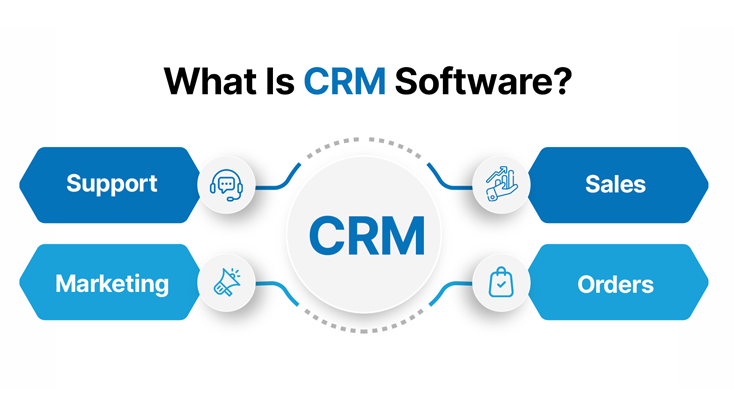
What Is CRM Software?
The term “CRM software” refers to software systems used in customer relationship management. The software enables businesses to maintain customer information while monitoring customer interactions. The software provides businesses with capabilities beyond basic information storage.
The system keeps track of all customer interactions through multiple channels. It records calls, emails, meetings, purchases, and support requests. Moreover, it keeps this information linked to each customer. As a result, nothing important gets lost over time.
The system maintains customer data for all customer interactions. Moreover, it ensures that all crucial information remains accessible throughout time.
Teams can access all necessary information without the need to search through emails or spreadsheets since everything exists in one unified location. Enhanced communication leads to improved contact tracking. Small businesses gain more advantages from this tool because people think that the tool benefits large companies.
Why Businesses Need CRM Software
Most businesses begin with spreadsheets. At first, this feels manageable. But as operations grow, spreadsheets create confusion. They lack automation. They also fail to update in real time. Because of this, teams miss details on that matter.
Such software solves these problems by creating one reliable source of truth. It helps manage customer interactions from first contact to post-sale support. Moreover, it supports sales, marketing, and service teams together.
It helps businesses by:
- Keeping customer data in one place
- Reducing manual work
- Improving follow-up consistency
- Offering real-time visibility
Additionally, teams work better when everyone sees the same information. However, the biggest improvement shows up in customer experience. Faster replies and better context naturally build trust.
CRM Software Examples
There are many platforms available today. Some focus on large enterprises. Others serve growing businesses better.
Common examples include
- Salesforce
- HubSpot CRM
- Zoho CRM
- Nexleon CRM
But not every tool is appropriate for every type of business. Small teams typically require something straightforward and reasonably priced. For this reason, customer relationship management software targeted at SMBs is still becoming more popular.
What Does CRM Mean in Marketing?
From tracking leads to shaping strategy, CRM tools now go beyond basic tasks. Because they capture how customers respond, marketing gains clearer insight. When campaigns unfold, every detail gets recorded for later review. Still, what matters most is how teams adapt using that data.
From knowing where visitors arrive to spotting top-performing promotions, marketers gain clear views through CRM tools. Different audience groups emerge once data flows in, opening paths for tailored messaging. Better responses often follow when outreach fits real interests. This improves both engagement and conversion.
Without such a system, marketing data is scattered. As a result, decisions are made through guesswork rather than insight. Before proceeding, it is critical to understand the different types of CRM systems available.
Types of CRM Systems
CRM tools come in different forms, depending on business needs. However, their core purpose remains the same.
-
Operational Customer Relationship Management
This type supports daily tasks like sales, marketing, and customer service. Most small businesses start here.
-
Analytical CRM
This kind of software system aims to focus on data and trends, and they help businesses understand customer behavior over time.
-
Collaborative Customer Relationship Management
This kind of software for custom relationships enhances team communication. It guarantees seamless transfer of information between departments. These days, a lot of platforms integrate such software to increase teams’ efficiency and productivity. Consequently, companies receive a comprehensive solution rather than individual tools.
Comprehensive Benefits of Using a CRM System
Why bother with a CRM? Let’s be real, keeping up with customers through emails, calls, and messages gets out of hand fast when their number increases, and it can be confusing as well. When handling it manually, things start falling between the cracks—some alerts trigger silently. Conversations go unnoticed; irritation builds slowly, and momentum along with efficiency drains away. However, with trustworthy customer relationship software, noise fades into the background since now everyone in your organization or team sees the same information at once, each fact neatly in place.
-
Keep Your Customers Around
Here’s the real payoff: people stick with you. When your team has a full record—old messages, past orders, open issues—they don’t keep asking customers to repeat themselves. It feels personal. People feel understood. That’s how you build trust. Over time, little things like that turn into real loyalty and more repeated customers.
-
Quicker, More Dependable Replies
Speed matters. The faster you find what you need, the faster you can help. Sales calls don’t get forgotten. Problems get fixed before they blow up. When customers aren’t left waiting, they notice—and they’ll come back.
-
Sales Forecasts That Aren’t Just Guesses
You can’t run on gut feelings forever. With a CRM, every lead and deal is out in the open. Your team always knows which opportunities are moving forward or falling behind. You can actually plan, set real goals, and make big decisions with confidence instead of guesswork.
-
Fewer Slip-Ups
Let’s not kid ourselves—jumping between spreadsheets, emails, and sticky notes is a disaster waiting to happen. Missed follow-ups, wrong info, duplicate contacts—it adds up. With a CRM, everything’s in one spot and up to date, and everyone’s working with the same info.
-
Data That Actually Tells You Something
A CRM isn’t just a giant filing cabinet. It turns your data into something useful. You get reports and dashboards that actually show you what’s working and what’s falling flat. So you’re not just guessing—you’re making decisions with real numbers to back you up.
-
Everyone Gets Treated Right
Probably the best part: customers get the same solid experience, no matter who they talk to. That kind of consistency builds real confidence. People know what to expect, and that keeps them loyal for the long run. Long story short: CRM software isn’t just another gadget for the office. It’s what keeps your team connected, your customers happy, and your business growing for real.
CRM Software Is Not Just for Big Businesses
Many believe these systems are only for large companies. However, that idea no longer holds true. Small and medium-sized businesses face similar challenges, just at a smaller scale.
Leads still need follow-ups. Customers still expect quick answers. Invoices still need to be tracked. When managed manually, mistakes happen faster. This is where customer relationship management software makes a real difference.
If you need such solutions, Nexleon CRM & Helpdesk software products are excellent for you because they have been designed with small teams in mind. Invoicing, lead tracking, customer management, and support are all integrated into one system. Additionally, it continues to be inexpensive and simple to use.
Businesses expand with clarity rather than chaos, and our SaaS software keeps teams organized, responsive, and focused without making them feel overburdened.
Conclusion
The purpose of this article is to provide in-depth, useful information about what CRM software is, how it functions, and why it is important for contemporary businesses. It also discusses various system types, real-world examples, and its function in marketing. Most significantly, it dispels the misconception that these tools are only necessary for big businesses. In actuality, early adoption of the appropriate CRM system benefits small and medium-sized businesses just as much, if not more.
As stated, this is where our solutions like Nexleon CRM & Helpdesk stand out, as they are built specifically for growing businesses that need practical focus solutions. Moreover, these combine several functionalities, such as customer management, lead tracking, invoicing, and support, into one simple platform, helping teams stay organized, responsive, and focused. For teams looking to move forward without chaos, adopting the right CRM software like ours is a good idea, and the best part is that they are affordable for even the smallest businesses and teams.
Frequently Asked Questions
Your business gets a helping hand when you use CRM software. Every detail about customers’ location, calls made, messages sent, what they bought, and help they asked for. Forget flipping through messy notes or endless spreadsheet tabs. Stay on top of things since everything has its place. Missed follow-ups become a rarity once the order takes hold because of CRM.
Businesses frequently experience confusion as their clientele grows. Instead of depending on spreadsheets or memory, CRM systems quietly take over in this situation, automatically syncing data and alerting employees when responses are due. Delays are reduced, mistakes are reduced through consistency, and people feel more comfortable working with you, all of which contribute to increased speed.
With CRM, sales teams know exactly who to reach out to next. Instead of wondering, they follow clear signals from actual interactions. Marketing gains a view into which efforts truly connect with people. Campaign results become visible, not imagined. Paths become clearer when leads show where they came from. Confusion fades away and gives way to behavior-based responses when making decisions; information flows to the right person with clarity, silently improving the overall efficiency in all departments.
Actually, it’s quite the opposite. Smaller teams face identical challenges—yet lack big crews to handle the load. Right from day one, a CRM keeps details within reach and operations steady while scaling happens without dropping customer interaction quality, and things just stay under control.
Having Nexleon CRM and Helpdesk is literally like having one tool that holds everything together—leads, clients, bills, help tickets—no switching around. Everything simply goes more quickly when everyone is in agreement. Every member of your team stays in sync and prepared to step in when necessary, eliminating the need to switch between apps or lose track of details. The actual victory? Your customers genuinely feel heard, valued, and cared for at every stage, whether it’s through marketing or customer service.